
Studio vs home podcast recording: what’s right for me?
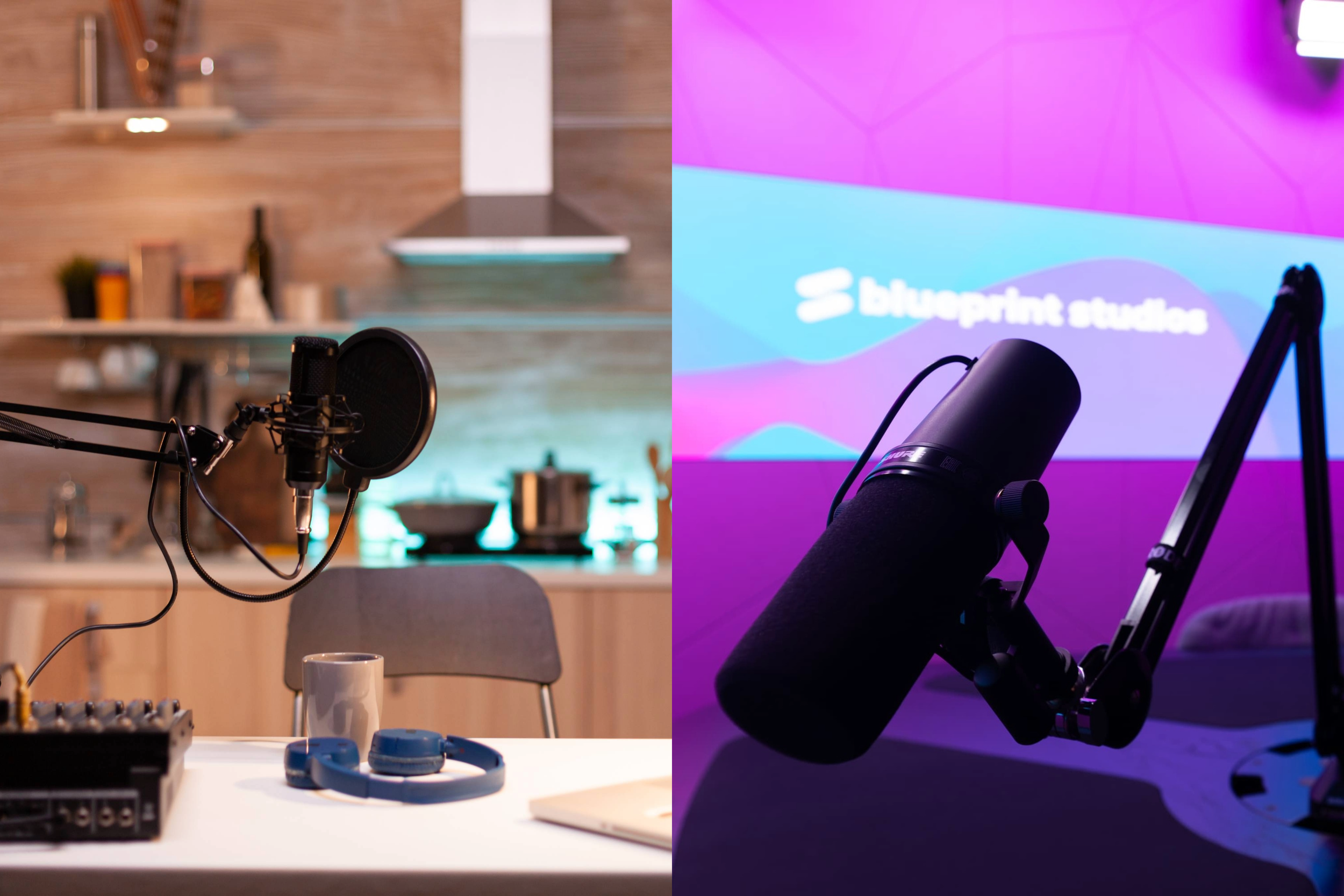
If you’re starting a podcast (or thinking about improving one), one of the first decisions you’ll face is studio vs home podcast recording.
Both options can work. Both have trade-offs. The right choice depends on what you’re trying to achieve, whether you have any budget, how often you record and how much time you want to spend fixing problems later.
Here’s a clear breakdown to help you decide.
Recording a podcast at home
Recording a podcast at home is often the first step for many creators, and for good reason.
The upsides to recording a podcast at home
Low cost – you don’t need to hire a studio
Convenient – record whenever you want, without having to travel
Good for testing ideas – great for early episodes or pilots
If you already have a quiet space, a decent mic and some basic knowledge, home recording can be enough to get started.
The downsides to recording a podcast at home
Background noise (traffic, neighbours, heating, pets)
Inconsistent sound from episode to episode
Room echo that’s hard to fix in editing
Time spent troubleshooting instead of recording
Poor visuals if it's a video podcast
More work in post-production
Many people don’t realise how much effort goes into making home-recorded audio sound professional – especially once you add remote guests or video. The home-recorded podcasts you listen to will almost definitely have spent money on quality microphones (and lighting, if it's a vodcast), and they may well have had post-production support too.
Home recording is absolutely the right choice for some content creators, but just keep in mind it still costs money and takes more time than going to a studio.
Recording in a podcast studio
A podcast studio removes most of the common problems before you even hit record. You're guaranteed quality microphones and lighting, and excellent cameras if you're doing a video podcast. The quality of the podcast is undoubtedly better – but it's not for everyone.
The upsides to recording a podcast in a studio
Sound-treated space – no echo, no unwanted noise
Professional microphones and audio setup
Consistent sound quality every time
Technical support if something goes wrong
Faster recording sessions
Creative advice – some studios will offer tips on how to improve a particular part of your podcast, especially video podcasts.
Studios are especially useful if:
You’re recording regularly
You have multiple hosts or guests
You want video as well as audio
The podcast represents a brand or business
You want a more polished, professional result
The downsides to recording a podcast in a studio
Cost – it's going to cost more than doing it at home, even if you're spending money on mics and lighting
Paying for more than you need – some studios have such a high spec that your cost will cover, which means you can end up paying for incredibly high-tech equipment that you don't use
Travel – you can't just head to the spare room or office
Availability – even if you know when you might want to record, the studio might already be booked
If you want a polished, professional result, a studio will always be the right choice, and with more available the chances are you'll be able to find one that does what you need, for the price you need.
Let's explore the benefits of recording in a studio in a bit more detail.
Sound quality: the biggest difference
This is usually the deciding factor.
Home recordings can sound fine, but studio recordings sound clean, balanced every time. That difference is immediately noticeable to listeners, even if they can’t explain why.
If you’re building credibility, pitching to guests, inviting guests onto your podcast or representing a brand, sound quality should be top of the list.
Time and Effort
Home recording often looks cheaper on paper, but it can cost more in time. If you're low on budget, or don't have one at all, you'll be willing to spend the time on your podcast. But if you can afford to pay for a studio, in the long run this is often preferable.
Ask yourself (or a content creator you know, if you're thinking about starting your first podcast):
How long do you spend setting up each session?
How much time goes into editing and fixing audio issues?
How often do you re-record because something went wrong?
How long does it take to create social clips?
Studio recording is usually:
Quicker to set up
Easier to repeat consistently
Less stressful
That matters if you’re fitting podcasting around a busy schedule.
Video changes the equation
As mentioned, if you’re planning a video podcast, the balance shifts even further in favour of recording in a studio.
Recording video at home means:
Managing lighting
Framing shots
Syncing audio and video
Making the space look presentable
Finding a space for any guests
A studio already has proper lighting, multiple cameras, clean backgrounds and audio and video working together. That’s a big reason many creators move from home to studio once video becomes part of the plan.
Home vs video podcasting: which should you choose?
Here’s a simple way to think about it:
Home recording works well if:
You’re just starting out
You’re experimenting with format
Budget is the main constraint
Perfection isn’t the priority
Studio recording makes sense if:
You want consistent, professional quality
You’re recording regularly
You have a budget (it doesn't have to be big - Blueprint Studios London starts at £124/hour + VAT)
You have guests or co-hosts
The podcast supports a business or brand
You want to save time and avoid technical headaches
There’s no “right” answer to the studio vs home podcast recording question – it completely depends on your goals and your situation.
Our Podcast Studio page and FAQs walk through what’s included, how sessions work and when studio recording makes the most sense. Sometimes the best way to decide is simply to try it once and see the difference for yourself.
Want to try out Blueprint Studios London?
If you think Blueprint Studios London might be the studio for you, you can book anything from a free tour to an hour's session to hiring out the studio for a full day. If you have any questions, just get in touch with our friendly team, who will be happy to help.